February 9, 1825
The House picks the President again
No one wins a majority of electoral votes in 1824, and the House chooses John Quincy Adams.
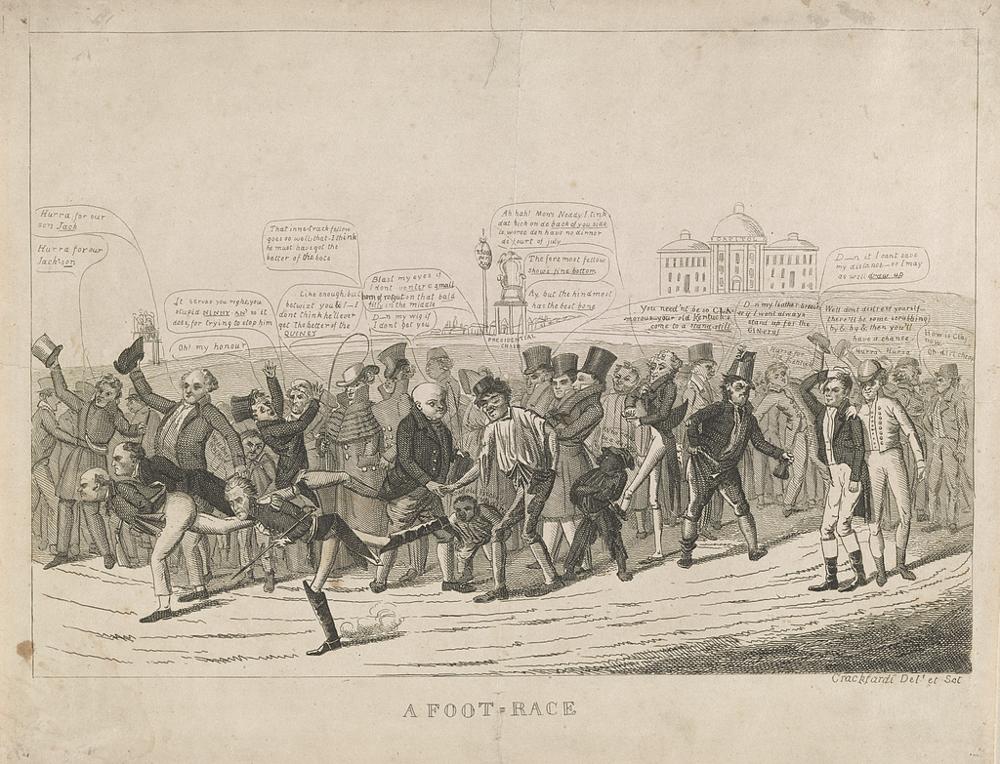
Four candidates split the 1824 electoral vote. Andrew Jackson leads in electoral votes, and in the popular vote in the 18 states that held one, but falls short of a majority, so under the 12th Amendment the House chooses among the top three, one vote per state delegation.
Henry Clay, the Speaker, who finished fourth, backs John Quincy Adams. On February 9, 1825, the House elects Adams on the first ballot with 13 of the 24 states.
Behind the lines
Adams then names Clay Secretary of State. Jackson and his supporters call it a "corrupt bargain." Jackson defeats Adams in 1828. No presidential election has gone to the House since.
See the 18th Congress map (1823–1825) →
Sources
- National Archives: The election of 1824
- Wikipedia: 1824 United States presidential election
- U.S. House: Electoral College
← The Missouri CompromiseThe Indian Removal Act →