October 4, 1794
The Whiskey Rebellion
Washington calls out an army against Pennsylvania farmers who refuse a federal tax.
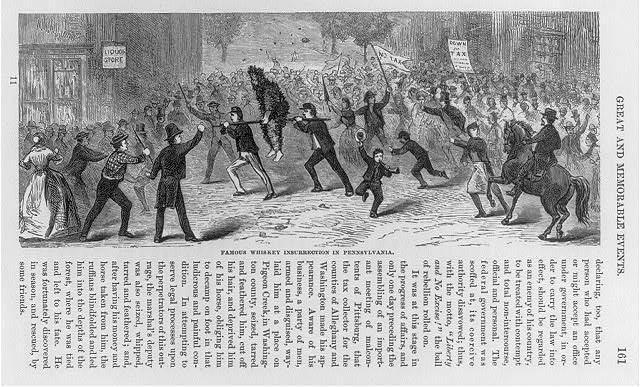
In 1791 Congress taxes distilled spirits to help pay the national debt. Farmers in western Pennsylvania, who turn much of their grain into whiskey, resist. Tax collectors are tarred and feathered, and in July 1794 armed men attack the home of a federal tax inspector.
President Washington calls out about 13,000 militia and in October 1794 rides west, reaching Carlisle on October 4 and reviewing troops at Fort Cumberland, Maryland, then hands command to Henry Lee. The army meets no resistance, and the rebellion collapses without a battle.
Behind the lines
It is an early test of whether the new federal government can enforce its laws inside a state. A later tax protest, Fries's Rebellion, follows in eastern Pennsylvania in 1799; President John Adams later pardons its leaders.
See the 3rd Congress map (1793–1795) →
Sources
On the state pages
- PennsylvaniaPennsylvania has tried nearly every way of electing a delegation: statewide, by district, by gerrymander and by court order.
← The first apportionmentThe House picks the President →