February 17, 1964
One person, one vote
Congressional districts must have equal populations. Nearly every state redraws.
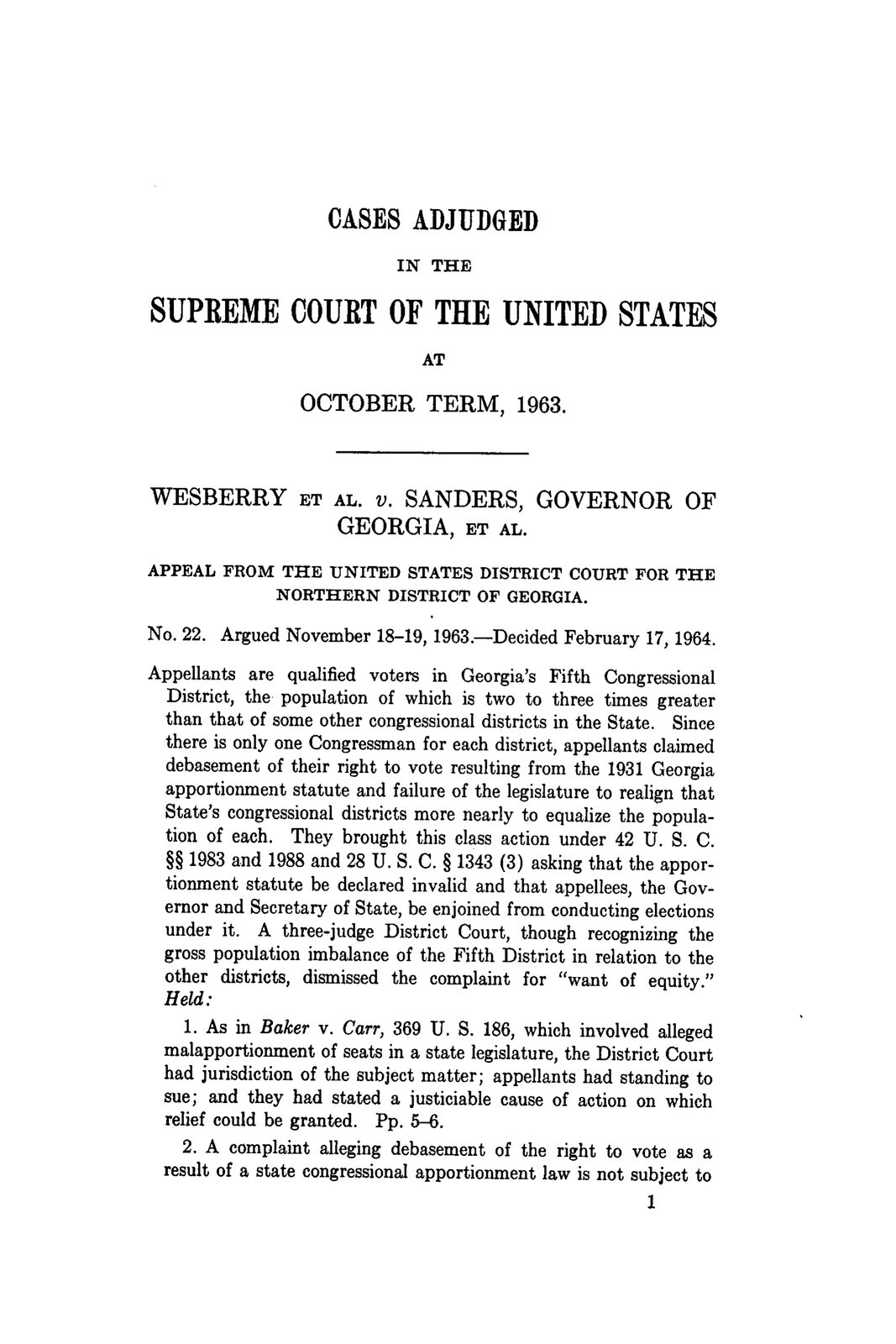
In Wesberry v. Sanders, Georgia's Atlanta-based 5th District had about three times the population of the state's smallest district. The Court rules that one person's vote for Congress must be worth as much as another's.
Reynolds v. Sims applies the same rule to state legislatures four months later.
Behind the lines
This set off the "reapportionment revolution." Watch the maps from 1964 to 1972: almost every state with more than one seat redraws, many for the first time in decades, and suburbs and cities gain seats at the expense of rural areas.
Equal populations ended one form of manipulation and made another more precise. Once every district had to hold the same number of people, mapmakers who controlled the lines could still choose which people.
See the 88th Congress map (1963–1965) →
Sources
On the state pages
- GeorgiaGeorgia elected its whole delegation statewide for most of its first fifty years, gave the Supreme Court the case, Gray v.
← Kennedy is assassinatedThe Civil Rights Act →