March 4, 1933
The New Deal landslide
In the Depression, Democrats win more than 300 House seats.
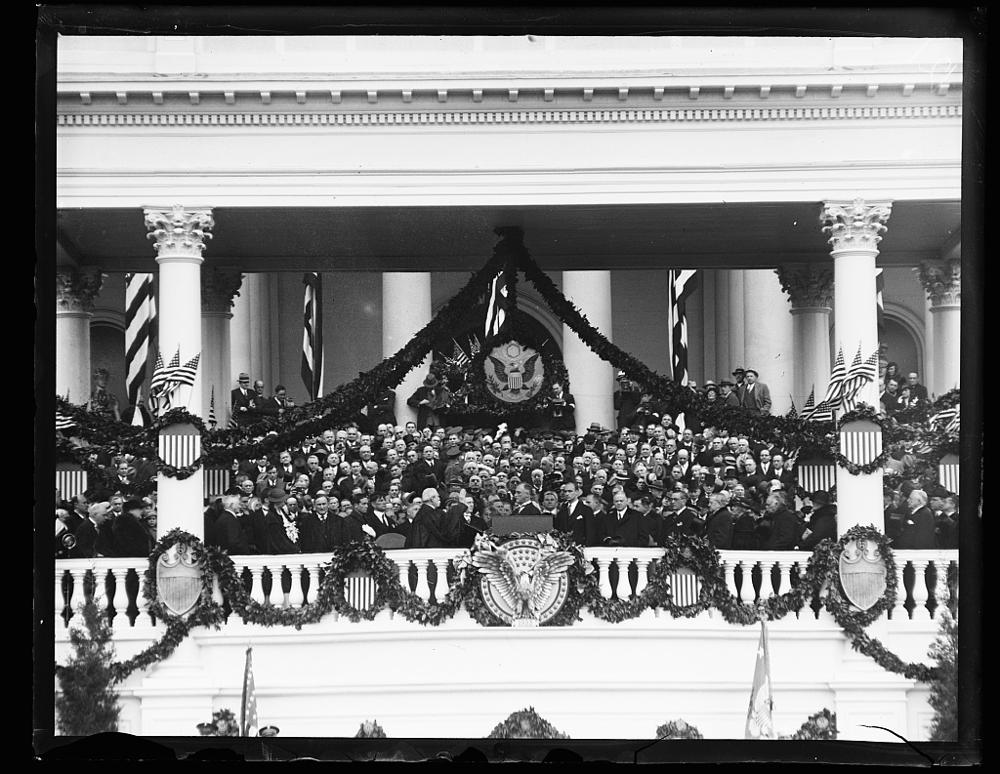
Franklin Roosevelt takes office with huge Democratic majorities. His New Deal coalition of the white South, Northern cities, unions and farmers dominates the House for most of the next sixty years. Watch the national map turn deep blue.
Behind the lines
The 1932 election was the first under the 1929 apportionment, and several states never settled their new lines. In Minnesota, which lost a seat, Governor Floyd Olson vetoed the legislature's map, and in Smiley v. Holm the Supreme Court ruled that the veto counted. Missouri's governor vetoed its map too. With no valid districts, Minnesota, Missouri, Kentucky and Virginia elected every member statewide. On this map each of them is one solid shape.
Statewide races magnified the landslide. Democrats won all 13 of Missouri's seats and all 9 in both Kentucky and Virginia. In Minnesota the winner was a third party: the Farmer-Labor Party took 5 of the 9 seats, and Republicans fell from nine to three.
See the 73rd Congress map (1933–1935) →
Sources
On the state pages
- MinnesotaMinnesota's 1932 veto fight produced a Supreme Court precedent still cited today, and its divided governments have left courts to draw nearly every map since.
- MissouriMissouri has elected its whole delegation statewide when its governor and legislature couldn't agree, and in 2025 tried to split Kansas City before voters…
- KentuckyKentucky began as Virginia's western district and became the first state west of the Appalachians.
- VirginiaVirginia's redistricting fights began with James Madison in 1788.
← The stock market crashesSocial Security →