May 30, 1854
The Kansas–Nebraska Act
Settlers in two new territories may vote on slavery, reopening a fight the Missouri Compromise had settled.
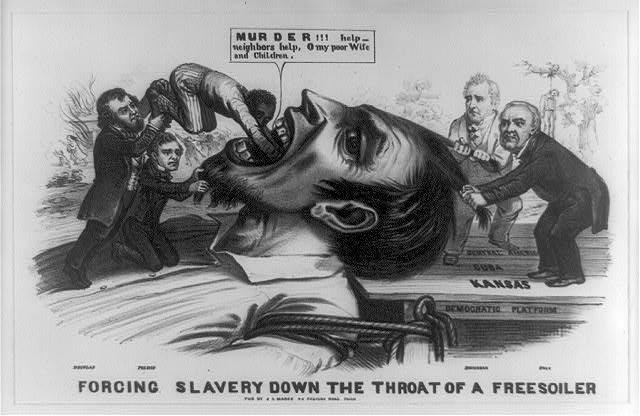
Senator Stephen Douglas of Illinois writes a bill organizing the Kansas and Nebraska territories and letting their settlers decide whether to allow slavery. It repeals the Missouri Compromise line, which had barred slavery there. President Franklin Pierce signs it on May 30, 1854.
Settlers for and against slavery pour into Kansas, and the violence that follows becomes known as "Bleeding Kansas."
Behind the lines
Opponents of the act organize a new party, the Republicans. In the 1854 elections, Pierce's Democrats lose their House majority.
See the 33rd Congress map (1853–1855) →
Sources
← The Compromise of 1850Dred Scott v. Sandford →