January 31, 1865
The House passes the 13th Amendment
Seven months after it failed, the amendment ending slavery clears the House, 119 to 56.
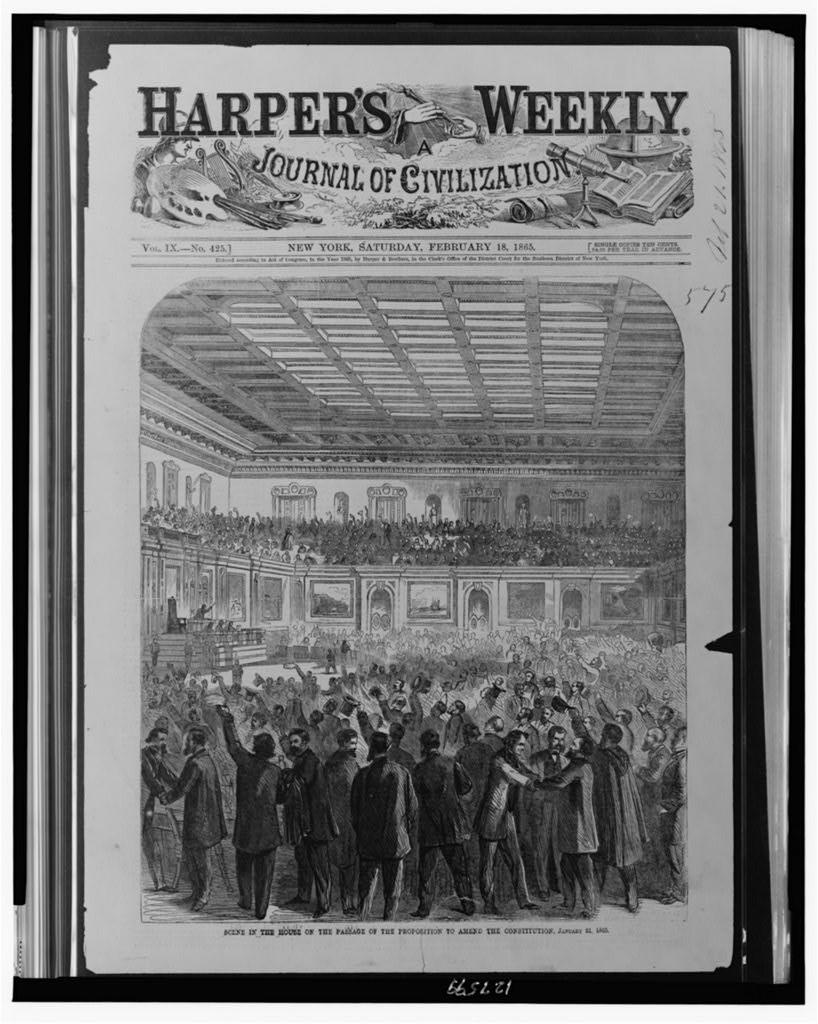
The Senate passed the amendment abolishing slavery in April 1864, but it fell short of two-thirds in the House that June. After the 1864 elections, President Lincoln presses the outgoing House to try again.
On January 31, 1865, it passes 119 to 56, and celebration breaks out in the chamber and the galleries. The states ratify it in December 1865.
Behind the lines
Abolition left the three-fifths clause with no one to apply to, and the 14th Amendment (1868) replaced it with a count of "the whole number of persons in each State." From the 1870 census on, formerly enslaved people count in full toward a state's House seats.
See the 38th Congress map (1863–1865) →
Sources
← The Emancipation ProclamationLee surrenders at Appomattox →