February 3, 1870
The 15th Amendment
States may no longer deny the vote because of race.
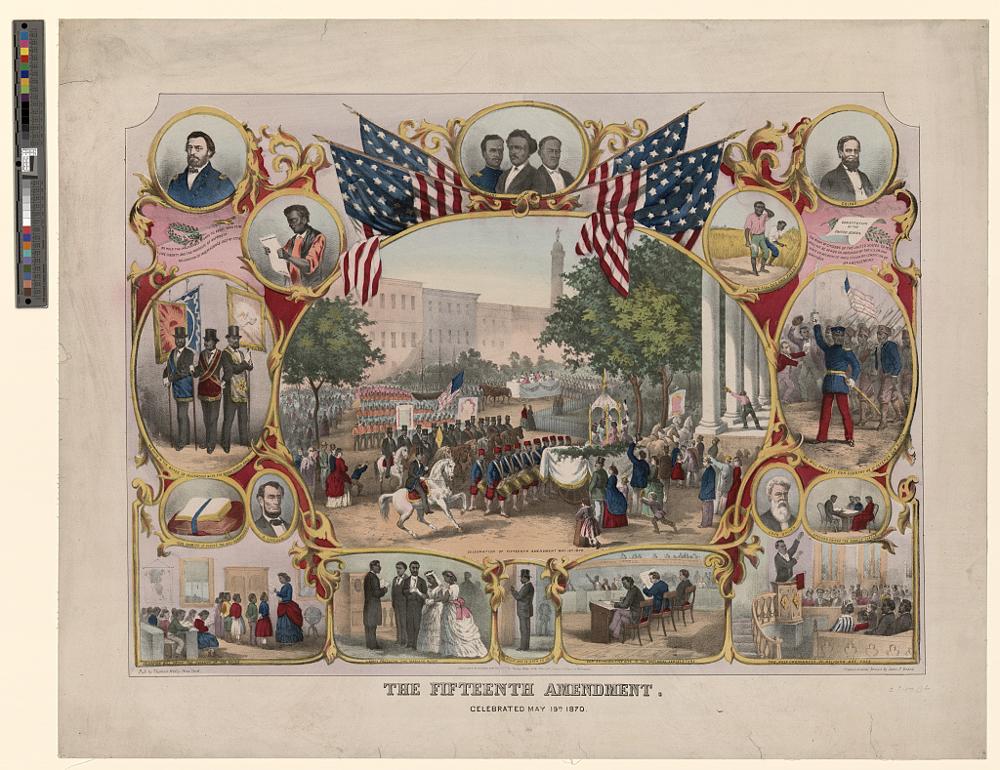
Ratified February 3, 1870, the amendment bars the federal and state governments from denying a citizen the vote "on account of race, color, or previous condition of servitude."
Black men vote and hold office in many Southern states. In December 1870, Joseph Rainey of South Carolina becomes the first Black member of the House.
Behind the lines
The amendment says nothing about poll taxes, literacy tests or residency rules. Southern states later use those, among other tools, to strip most Black men from the rolls (see 1890).
See the 41st Congress map (1869–1871) →
Sources
← The transcontinental railroadThe first Black member of the House →